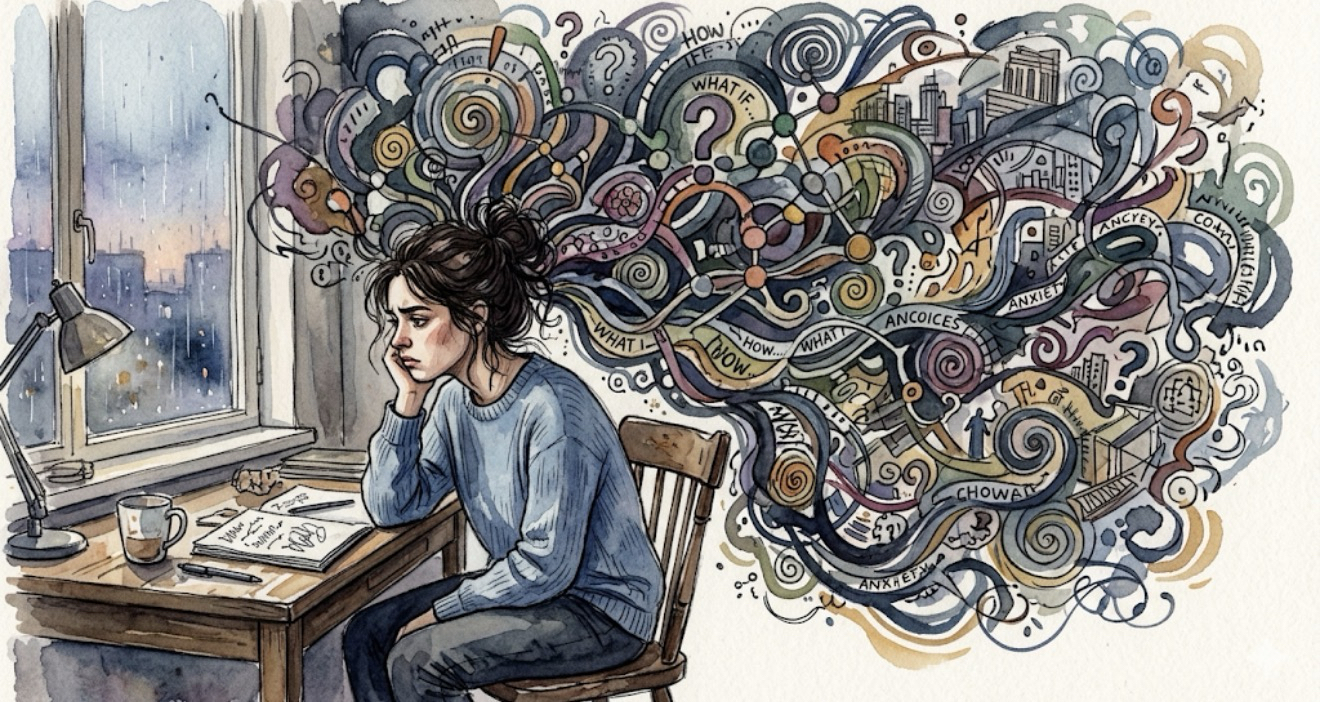
Have you ever replayed a conversation in your head for hours or worried endlessly about a decision you’ve already made? If so, you’re not alone. Overthinking is a common mental habit that affects people of all ages.
If these thought patterns become persistent or begin interfering with your daily life, seeking support from a qualified mental health professional can help you understand the underlying causes and develop healthier coping strategies.
While reflecting on situations can sometimes be helpful, excessive thinking often leads to stress, anxiety, and difficulty making decisions.
Understanding the psychology behind overthinking can help you recognize why it happens and, more importantly, how to manage it.
What Is Overthinking?
Overthinking is the habit of dwelling on thoughts, problems, or situations longer than necessary. Instead of finding solutions, the mind becomes trapped in repetitive thinking patterns that often focus on “what if” scenarios, past mistakes, or imagined future outcomes.
Overthinking generally appears in two forms:
• Rumination: Constantly replaying past events and regretting decisions.
• Worry: Obsessing over future events that may never happen.
Both patterns can increase emotional distress without solving the actual problem.
Why Do People Overthink?
• Fear of Making the Wrong Decision
Many people overthink because they want to avoid mistakes. They believe that if they analyze every possibility, they’ll make the perfect choice. In reality, searching for certainty often creates even more confusion.
• Anxiety and Stress
When you’re anxious, your brain naturally looks for potential threats. This survival mechanism can become overactive, causing you to imagine worst-case scenarios even when there’s little evidence that they’ll happen.
• Perfectionism
Perfectionists often feel that every decision must be flawless. This mindset encourages endless analysis, making even simple choices feel overwhelming.
• Low Self-Confidence
People who doubt themselves may constantly question their actions and decisions. They seek reassurance from their own thoughts but rarely find it, leading to an endless cycle of overthinking.
• Past Negative Experiences
Previous failures, rejection, or emotional pain can make the brain more cautious. As a result, it may overanalyze future situations in an attempt to prevent similar experiences.
The Psychology Behind Overthinking
From a psychological perspective, overthinking is closely linked to the brain’s threat-detection system. The mind often mistakes uncertainty for danger, prompting continuous analysis in an attempt to stay safe.
Ironically, this mental effort rarely provides certainty. Instead, it increases stress hormones, makes emotions feel more intense, and keeps the brain focused on potential problems rather than practical solutions.
Research also suggests that repetitive negative thinking is associated with increased symptoms of anxiety, depression, and chronic stress.
Common Signs of Overthinking
You may be overthinking if you:
• Replay conversations repeatedly.
• Constantly imagine worst-case scenarios.
• Have trouble making decisions.
• Second-guess yourself after making a choice.
• Struggle to relax because your mind won’t slow down.
• Lose sleep thinking about problems.
Recognizing these signs is the first step toward changing the habit.
How Overthinking Affects Mental Health
Occasional reflection is normal, but chronic overthinking can have serious effects on emotional well-being.
Some common consequences include:
• Increased anxiety
• Higher stress levels
• Difficulty concentrating
• Sleep problems
• Reduced productivity
• Emotional exhaustion
• Lower self-confidence
Over time, overthinking can make everyday challenges feel much larger than they really are.
How to Stop Overthinking
• Focus on What You Can Control
Instead of worrying about every possible outcome, direct your energy toward actions you can take today.
• Challenge Negative Thoughts
Ask yourself:
1. Is there real evidence for this fear?
2. Am I assuming the worst?
3. What is the most realistic outcome?
These questions can help interrupt automatic negative thinking.
• Set a Time Limit for Decisions
Give yourself a reasonable amount of time to gather information and make a choice. Endless analysis rarely leads to better decisions.
• Practice Mindfulness
Mindfulness encourages you to observe your thoughts without becoming trapped in them. Simple breathing exercises or meditation can help bring your attention back to the present moment.
• Write Your Thoughts Down
Journaling helps organize racing thoughts and often makes problems seem more manageable.
• Accept That Perfection Doesn’t Exist
No decision comes with a guarantee. Learning to accept uncertainty can reduce the urge to analyze every possibility.
When Should You Seek Professional Help?
If overthinking interferes with your work, relationships, sleep, or daily life, it may be helpful to speak with a licensed mental health professional. Persistent overthinking can sometimes be linked to anxiety disorders, depression, or obsessive thinking patterns, all of which can improve with appropriate support and treatment.
Don’t forget to follow our page and improve your understanding of human thoughts & emotions on our website.
— Happy Reading from Tia —
Leave a Reply