
Disclosure: This post contains affiliate links at no extra cost to you.
Emotional attachment is the deep, invisible psychological bond that connects one person to another across space and time.
It is not just a casual feeling of liking someone; it is a profound state of emotional and physical reliance where another person becomes your primary source of comfort, safety, and validation.
When you form an emotional attachment, that person’s presence, words, and actions directly impact your mood, your nervous system, and your view of the world. It is the reason why a warm embrace from a loved one can instantly lower your physical stress, while their emotional absence can trigger genuine panic or isolation.
From a behavioral standpoint, emotional attachment is a biological imperative built into human nature. It dictates how we seek closeness and how we react when that closeness is threatened.
When an attachment is secure, it functions like an anchor, giving you the confidence to explore life knowing you have a safe harbor to return to.
However, when it is insecure, it acts more like a emotional rollercoaster—leaving you constantly hyper-vigilant, tracking signs of rejection, or building protective walls to keep people at a distance.
1. What It Looks and Feels Like: The Daily Symptoms
When attachment patterns lean toward anxious tracking, your daily routine is often hijacked by a constant need for reassurance.
• Physical & Mental Symptoms: You might experience a racing heart, a knot in your stomach, or a sudden spike in cortisol (the stress hormone) if a text goes unanswered for too long.
• Daily Impact: It feels like constantly waiting for the other shoe to drop. Your mind might get stuck in an overthinking loop, replaying conversations or analyzing minor changes in someone’s tone of voice, which drains the mental energy you need for work, hobbies, or rest.
On the flip side, if your pattern leans toward avoidant distancing, the symptoms look like a compulsive need for total self-reliance.
• Physical & Mental Symptoms: You might feel a physical sensation of suffocation, tightness in your chest, or a strong urge to literally run away when someone tries to get emotionally close to you.
• Daily Impact: You might find yourself overpacking your daily schedule with work, solo projects, or fitness routines specifically to avoid quiet, unstructured moments where intimacy or vulnerability might catch up to you.
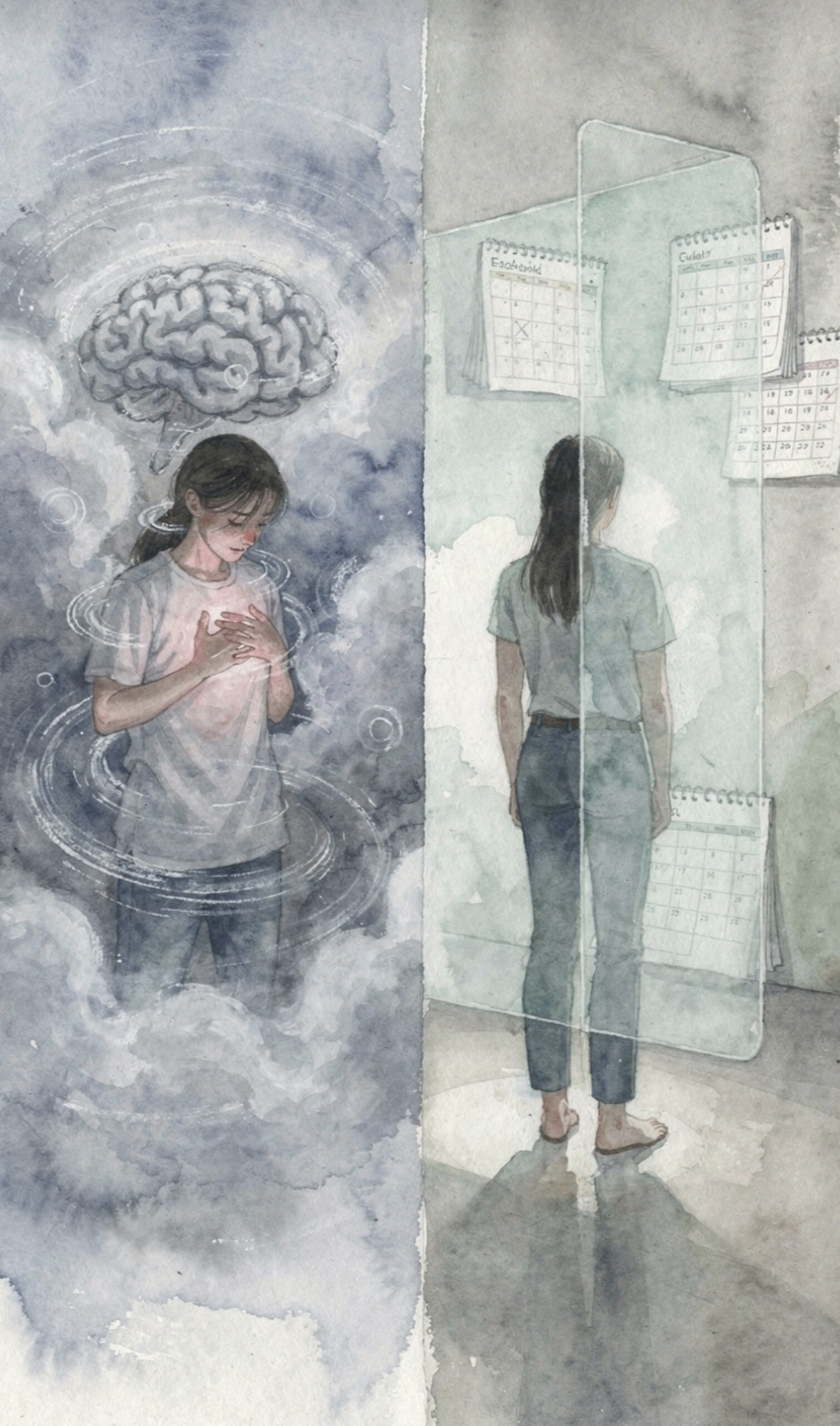
Anxious attachment feels like a fire you have to constantly feed with reassurance, while avoidant attachment feels like a wall you build to protect a house that is already empty.
Practical Strategies: Tending to the System
Managing these symptoms requires moving away from the survival responses of “fight, flight, or freeze” and bringing your nervous system back to a neutral, grounded state.
• For Anxious Spikes (The “Pause” Strategy): When a delayed response triggers a physical panic response, practice delaying your reaction. Give yourself a hard 15-minute boundary before sending an anxious follow-up message. During those 15 minutes, focus on deep, slow breaths where your exhale is longer than your inhale to physically signal to your body that you are safe in this exact moment.
• For Avoidant Urges (The “Micro-Dose” Strategy): When the urge to pull away and shut down hits, try to lean in just an inch instead of a mile. Express a tiny boundary instead of disappearing entirely. Saying something as simple as, “I feel a bit overwhelmed right now and need an hour to myself, but I will check back in with you tonight,” keeps the connection alive while respecting your need for space.
• Morning (Self-Anchoring): Start your day focusing entirely on yourself before opening your phone to check external notifications or messages. Spend the first 10 to 20 minutes journaling, stretching, or making a meal. This establishes the mental baseline that you are stable and grounded on your own, independent of external validation.
• Midday (Intentional Check-Ins): Schedule specific, dedicated blocks of time for checking social updates or personal messages, rather than leaving notifications on to constantly interrupt your focus. This prevents your attention from being pulled into reactive, anxious checking loops throughout your workday.
• Evening (Digital Decompress): Create a clear separation between your social world and your rest cycle. Put your devices away at least an hour before sleep to let your mind settle into a quiet, neutral space, ensuring your sleep quality isn’t compromised by late-night emotional processing.
When to Seek Professional Help
Modifying long-standing behavioral habits on your own can be deeply challenging. It is worth reaching out to a mental health professional if your attachment dynamics consistently interfere with your quality of life. Consider seeking support if:

Your peace of mind should never be a hostage to someone else’s screen time. Anchor your mornings in yourself, and your relationships will stop feeling like a rollercoaster.
The fear of being left behind or rejected triggers intense, daily anxiety that disrupts your ability to focus on your work or personal goals.You find yourself trapped in a repetitive loop of entering relationships that feel emotionally draining, unstable, or codependent.
Past personal friction or emotional distress leaves you feeling completely unable to trust others, causing you to preemptively push people away to avoid vulnerability.
A licensed therapist can provide practical tools tailored to your specific experiences, helping you build more balanced, secure connections while keeping your daily peace of mind intact.
Don’t forget to follow our page and improve your understanding of human thoughts & emotions on our website.
— Happy Reading from Tia —
Leave a Reply