
Disclosure: This post contains affiliate links at no extra cost to you.
We all do it. Whether you are psyching yourself up before a big presentation, scolding yourself for dropping a coffee cup, or silently running through a grocery list, you are engaging in self-talk. This internal monologue isn’t a sign of eccentricity; it is a fundamental human tool that shapes our reality, drives our focus, and directly impacts our mental health.
In recent years, psychologists have shifted from simply asking if we talk to ourselves to analyzing how we do it.
The science shows that changing a few specific words in your internal vocabulary can completely alter how your brain processes stress and handles challenges.
1. The Science Behind Your Internal Monologue
Self-talk acts as the operating system for our conscious mind.
When you talk to yourself, you are activating the same brain regions used for actual, spoken language.This internal chatter serves a massive evolutionary purpose: it helps us plan for the future, regulate our emotions, and reinforce our memory.
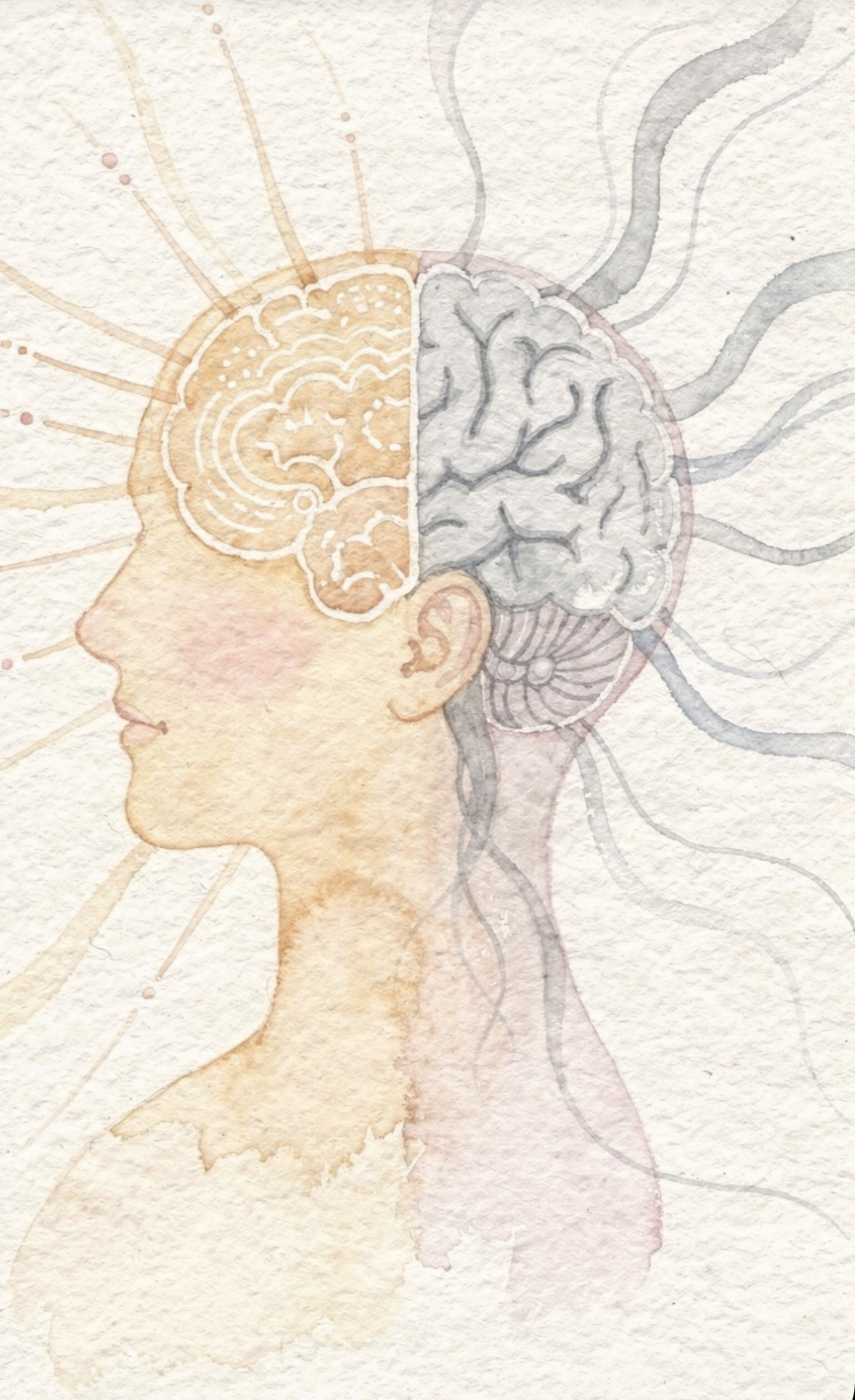
However, this system can easily become corrupted. Left unchecked, our brain’s natural survival mechanism—the “negativity bias”—can turn our self-talk into a relentless inner critic.
When your internal monologue is dominated by constant self-blame, catastrophizing, or doubt, it doesn’t just lower your mood; it actively spikes your body’s stress hormones, leaving you physically exhausted and mentally depleted.
2. Psychological Distance and the Power of Your Name
One of the most exciting breakthroughs in modern psychology is a concept called “psychological distance.” Research pioneered by experimental psychologists shows that when we are stressed, we tend to talk to ourselves in the first person (“How am I going to fix this? I’m totally stuck”). This linguistic choice pulls us deep into our emotions, making it incredibly hard to think clearly.

The fix is surprisingly simple: use your own name or third-person pronouns (he, she, they).
By asking yourself, “How is [Name] going to handle this?”, you trick your brain into viewing your situation from a distance, as if you are assessing a friend’s problem rather than your own.
This slight shift immediately cools down the emotional centers of the brain and activates the logical, problem-solving networks.
While these techniques can help, seeking professional guidance can provide personalized support and effective coping strategies.
3. Shifting from Judgment to Curiosity
Old school self-help advice often tells you to repeat positive phrases like, “I am amazing and everything is perfect.” The problem is that your brain knows when you are lying to yourself, so it rejects those phrases and makes you feel worse.
Instead of forcing yourself to be positive, modern psychology suggests using gentler, more realistic words that focus on learning. You can do this with two simple words:
The word “Yet”: Instead of saying, “I don’t know how to do this,” say, “I don’t know how to do this yet.” It reminds your brain that you can learn.
The word “And”: This lets you be honest about your feelings while still moving forward. For example: “This is really hard right now, and I am going to keep trying anyway.”
Symptoms
Here are the quick, main symptom signs of negative self-talk to watch out for, broken down by how they affect your mind and body:
Mental Signs
• The “What-If” Loop: Your mind constantly replays worst-case scenarios about the future.
• The Inner Critic: A non-stop internal voice that blames you for every mistake and ignores your successes.
• All-or-Nothing Thinking: Viewing things strictly as total victories or total failures, with no middle ground.
Emotional Signs
• Constant Self-Doubt: Feeling hesitant and unable to trust your own decisions.
• Helplessness: A growing feeling that no matter what you do, things won’t get better.
• Increased Irritability: Feeling easily frustrated or snappy with yourself and others.
Physical Signs
• Muscle Tension: Chronic tightness in your shoulders, neck, or jaw from constant mental stress.
• Exhaustion: Feeling physically drained because a looping mind keeps your body on high alert.
• Sleep Changes: Trouble falling asleep or staying asleep because your brain won’t turn off at night.
4. How to Reset Your Brain and Calm Your Emotions
When negative self-talk takes over, your brain enters a physical “fight-or-flight” state. It thinks you are in danger, so logic alone won’t work. To calm your emotions, you have to talk directly to your physical body using a simple four-step process:
Step 1: Notice and Name. Pause and say out loud what you are feeling physically. For example: “My chest feels tight and my heart is racing right now.” This pulls you out of the panic loop.
Step 2: Send a Safety Signal. Remind your brain that you are okay in this exact moment by saying: “I am uncomfortable right now, but I am physically safe in this room.”
Step 3: The 4-7-8 Reset Breath. Breathe in through your nose for 4 seconds, hold it for 7 seconds, and blow out slowly through your mouth for 8 seconds. This physically forces your nervous system to slow down and relax.
Step 4: Shift to “Yet”. Instead of fighting the thought or judging yourself, change your words to focus on learning. Switch “I can’t handle this” to “This is really hard right now, and I haven’t figured it out yet.”
When to Seek Professinal Help
Mastering your self-talk is an incredible tool for navigating daily stress, building resilience, and improving performance. However, shifting your mindset is not a cure-all for deep-seated clinical conditions. Sometimes, the internal chatter becomes too loud, too heavy, or too persistent to manage alone.

You should consider seeking the guidance of a licensed mental health professional if your negative self-talk, anxiety, or low mood lasts for more than two consecutive weeks, or if it begins to actively disrupt your daily routine—such as hurting your job performance, ruining your sleep, or straining your relationships.
If you feel locked in a loop of hopelessness or feel entirely overwhelmed by your internal state, a therapist can provide the objective, structured, and specialized strategies needed to safely help you find your footing again.
Don’t forget to follow our page and improve your understanding of human thoughts & emotions on our website.
— Happy Reading from Tia —
Leave a Reply