Disclosure: This post contains affiliate links at no extra cost to you.
We have all been told that eating healthy is good for our hearts and waistlines. But there is a much bigger reason to watch what you put on your plate: your food dictates how you think, feel, and react to stress. Your brain is the most demanding organ in your body, burning about 20% of your daily energy. It acts like a high-performance engine, and the quality of the fuel you put in determines whether your mind runs smoothly or sputters out halfway through the day.
1. The “Gut Feeling” is Real: Your Second Brain
Have you ever felt “butterflies” in your stomach when you were nervous, or lost your appetite before a big meeting?
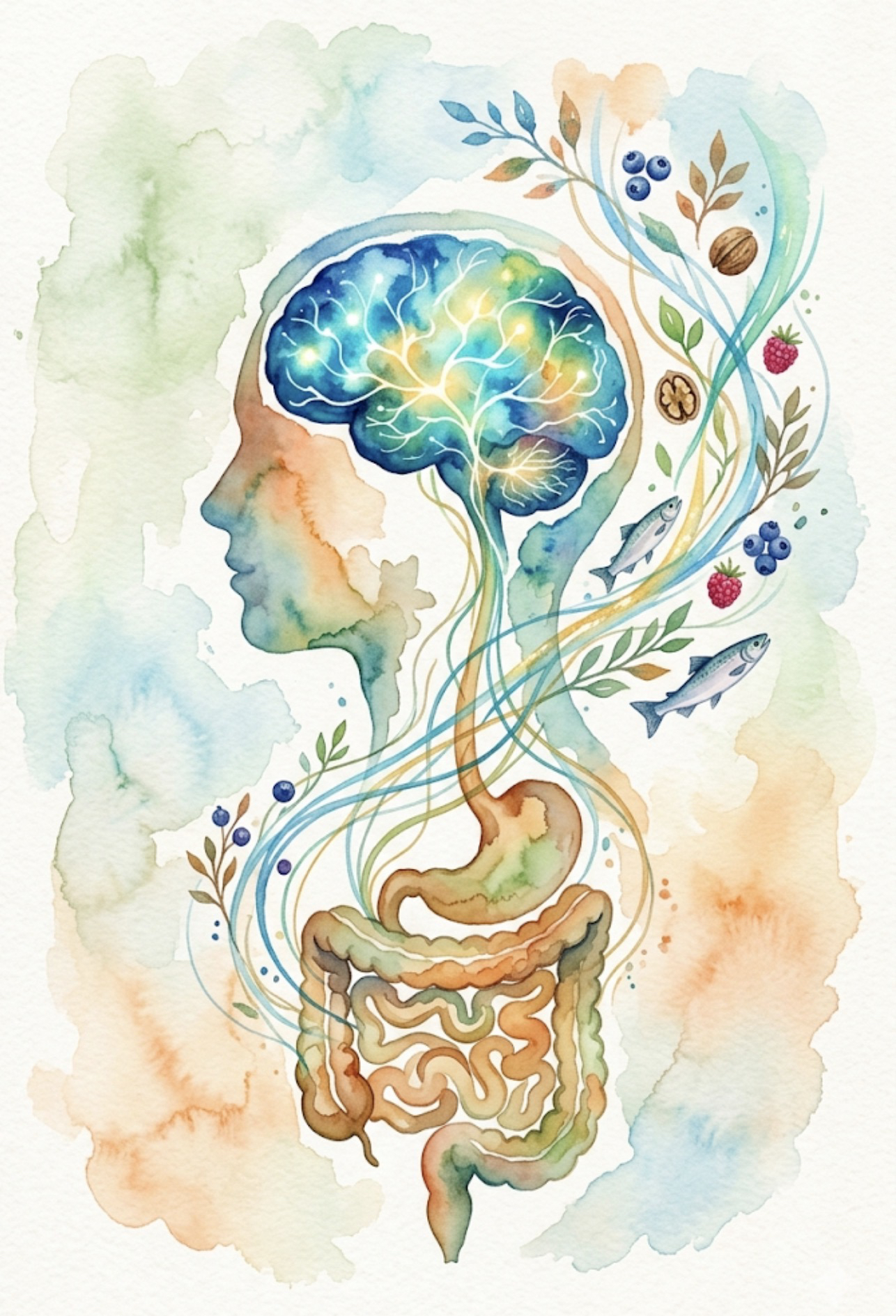
Because your gut and your brain are constantly talking to each other through a massive, direct communication line.
In fact, scientists often call your gut your “second brain” because it is packed with millions of nerves that monitor everything passing through your body.

The Mood Connection: You might think happiness is generated entirely in your head, but a massive chunk of your body’s “feel-good” chemicals (like serotonin) are actually manufactured in your digestive system by trillions of tiny, helpful gut microbes.
The Diet Impact: When you eat a diet full of heavily processed foods or deep-fried meals, you accidentally feed the “bad” bacteria in your gut. When these bad bacteria take over, they send distress signals up to your head, leaving you feeling anxious, irritable, or trapped in a state of chronic “brain fog.”
2. The Sugar Rollercoaster: Why Junk Food Makes You Cranky
But what goes up must come down.
When you consume simple sugars and refined carbs, your blood sugar spikes dramatically. To protect you, your body quickly pumps out insulin to clear that sugar, causing your energy levels to crash.
The Emotional Crash: When your blood sugar plummets below normal, your brain panics. It thinks it is starving, so it releases stress hormones like cortisol and adrenaline.
We have all experienced the afternoon slump. You grab a sugary coffee, a donut, or a bag of chips to get a quick energy boost. For about 30 minutes, you feel fantastic and focused.
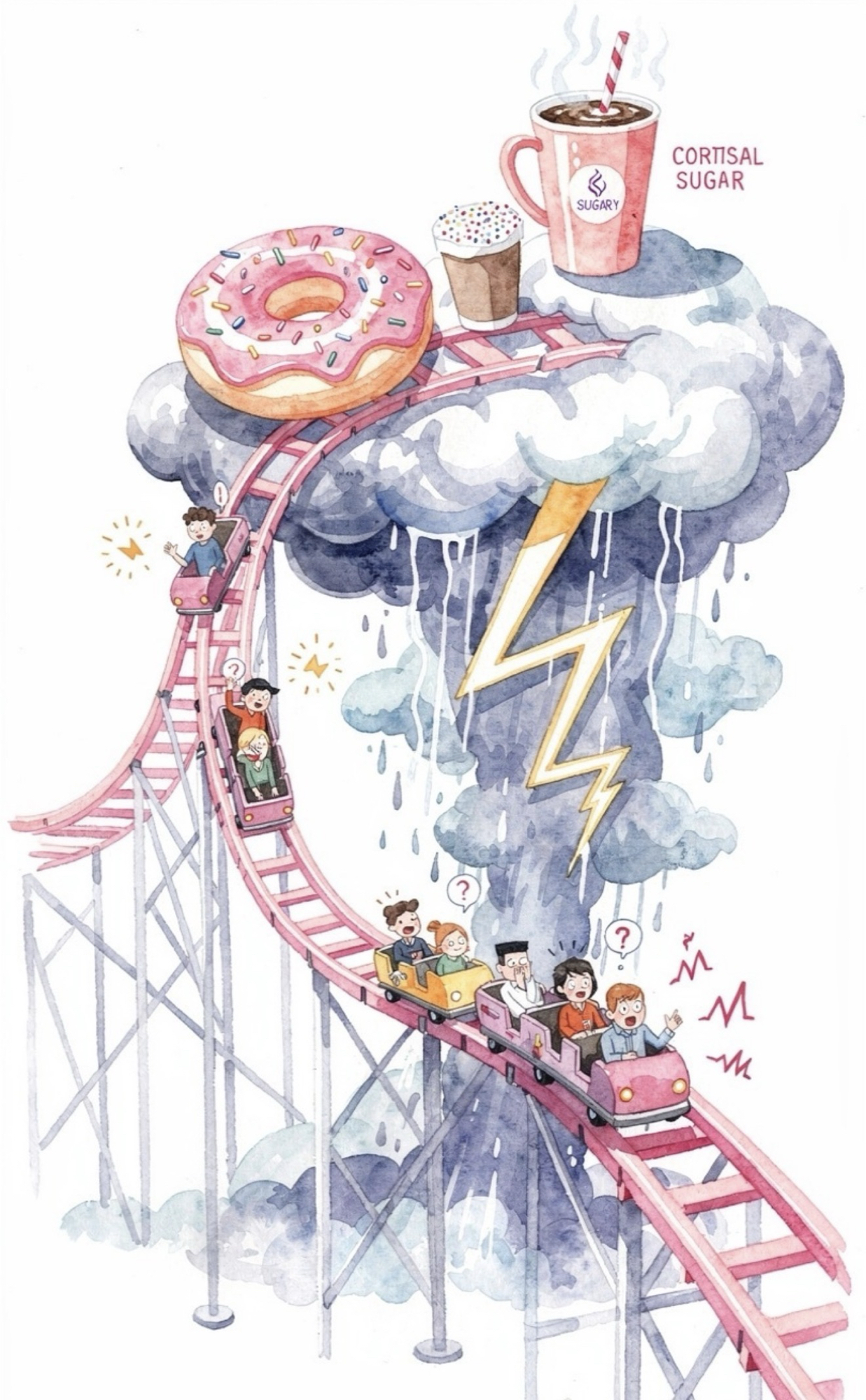
You aren’t just tired anymore—you are officially “hangry.”
Roller coaster of highs and lows ruins your ability to focus, makes you highly impulsive, and can trigger sudden waves of anxiety throughout the day.
3. Brain Maintenance: Building Better Machinery
Your brain cells are constantly repairing and rebuilding themselves, and they have to use whatever material you give them.
Think of your brain like a smartphone. For the screen to register your touch instantly, the surface needs to be smooth and responsive. In your brain, cell walls need healthy fats to pass information back and forth rapidly.
High-Quality Materials: Healthy fats found in foods like fish, walnuts, and olive oil act like premium building blocks. They keep your brain flexible, making it easier for you to learn new skills, retain memories, and bounce back from stressful situations.
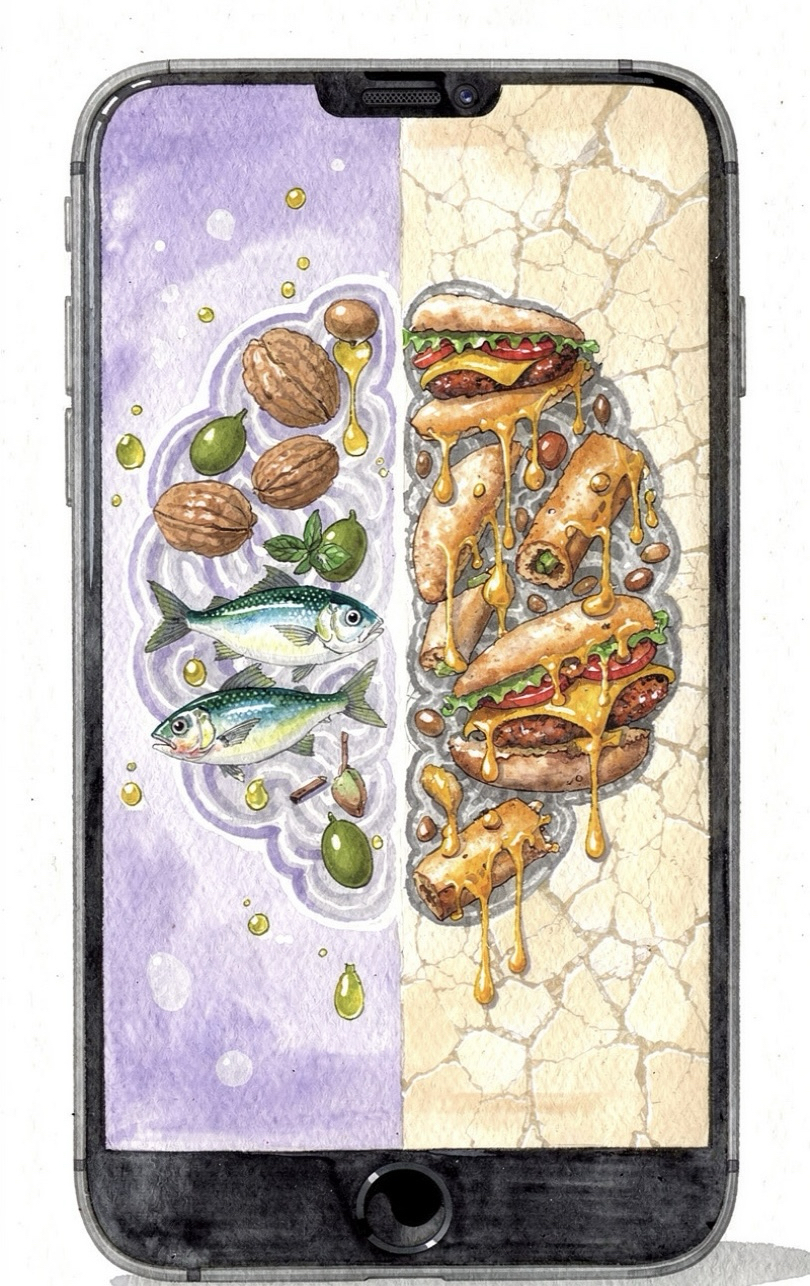
Low-Quality Materials: On the flip side, a constant diet of artificial trans fats and cheap oils makes your brain cell walls rigid and stiff. This slows down communication between cells, leading to slower thinking and a higher risk of mood slumps.
4. The Blueprint for a Clear Mind
You don’t need a complicated diet plan to see a massive difference in your mental clarity. You just need to focus on three simple principles:
• Keep it Level: Try to pair your carbohydrates with a little bit of protein or healthy fat (like putting peanut butter on an apple instead of eating just the apple). This slows down digestion and stops the sugar crashes before they start.
• Feed your Microbes: Eat “live” and fibrous foods. Things like yogurt, oats, bananas, and garlic keep your gut microbes happy, which keeps your mood stable.
• Hydrate First: Often, what feels like intense brain fog or sudden anxiety is actually just mild dehydration. Drink a glass of water before reaching for a sugary snack.
Real-World Science
If you want to look at the data proving this connection, these three key studies laid the groundwork:
• The SMILES Trial (2017): One of the first major medical studies to prove that changing a person’s diet to a fresh, whole-food pattern directly reduced clinical depression and anxiety symptoms.
• The Brain-Food Study (Gomez-Pinilla, 2008): A massive review of medical data showing that specific nutrients directly impact how fast your brain cells communicate and adapt to stress.
• The Gut-Brain Link (Cryan & Dinan, 2012): This research mapped out the exact pathway showing how the microscopic bacteria living in our stomachs can literally alter human behavior and emotions.
When to Seek Professional Support
While changing your diet is a great way to boost your daily mood and focus, it is not a substitute for medical care.

If you are struggling with severe anxiety, persistent depression, chronic brain fog, or deep-seated issues with food, it is important to get personalized support from a doctor.
Click here to connect with qualified professionals who can support your mental and nutritional health.
Don’t forget to follow our page and improve your understanding of human thoughts & emotions on our website.
— Happy Reading from Tia —
Leave a Reply